Installing Ziggy is simple. It runs in a single Docker container on the infrastructure of your choice.
For fault tolerance and normal loads you can use small (2GB) instances. For performance, just add larger instances to your cluster.
Overview
Level 1
The basic Ziggy cluster can have two or more servers. One of them runs the database.
Level 1 is fine for testing scaling but is not fault tolerant if the database server goes down.
DocsLevel 2
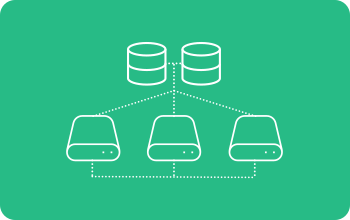
When you need both high performance and fault tolerance. The database can run in a managed service such as AWS RDS or in your own database cluster.
DocsMonitoring
Ziggy comes with several monitoring tools for the system and individual servers.
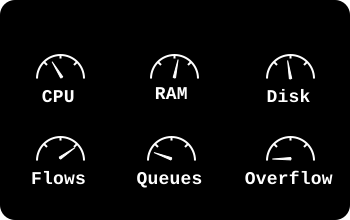
System resources, flows per second, queue sizes, queue overflow to database can all be monitored in the UI in real time.
DocsLoad Testing
We even offer a built-in load tester where you can run Flows under expected and extreme conditions.
Use Ziggy monitoring to see exactly how the system and each server is performing.
Docs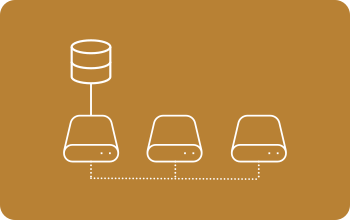

Level 1
The basic Ziggy cluster can have two or more servers. One of them runs the database.
Level 1 is fine for testing scaling but is not fault tolerant if the database server goes down.
DocsLevel 2
When you need both high performance and fault tolerance. The database can run in a managed service such as AWS RDS or in your own database cluster.
DocsMonitoring
Ziggy comes with several monitoring tools for the system and individual servers.
System resources, flows per second, queue sizes, queue overflow to database can all be monitored in the UI in real time.
DocsLoad Testing
We even offer a built-in load tester where you can run Flows under expected and extreme conditions.
Use Ziggy monitoring to see exactly how the system and each server is performing.
Docs